Proxmox
Setup a new ERPNext instance in Proxmox
This chater describe how to start a new instance of ERPnext in a virtual machine
Current Proxmox server is availabel at https://pve.churra-tailor.ts.net
Create a Virtual Machine with Debian or Ubuntu
In this step we will create a new Virtual machine that will be used to install ERPNExt, the Digital ocean would be to "Create a new droplet"
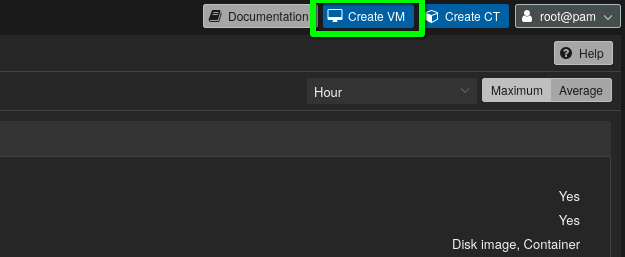
- In the proxmox UI, choose "Create a new VM"
- Follows instructions
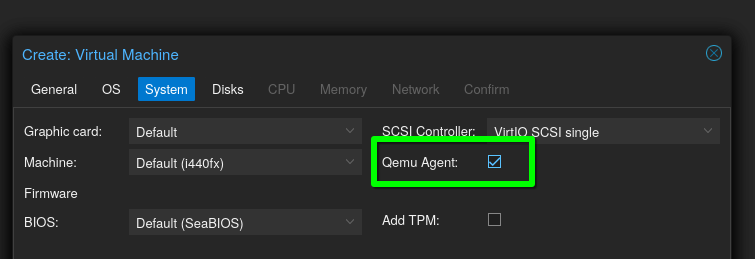
- Check the QEMU Agent checkbox
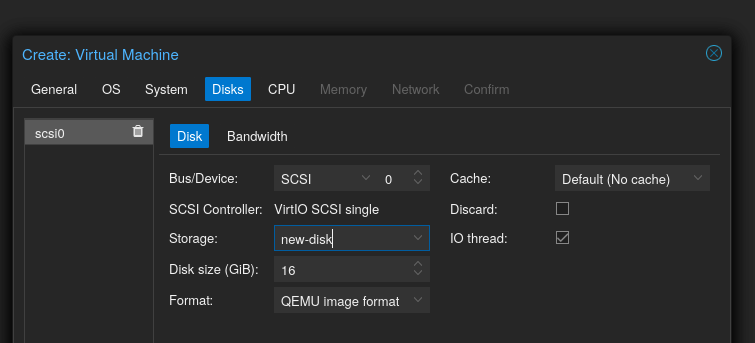
- In the "storage" tab, make bsure to pick a disk with enough space
Install the OS
In this step we will install the OS on the virtual machine, in Digital ocean this step is usually done automatically
- Start the VM
- Open the console from the web interface
- Follow the installation instructions
- Create an "erpnext_admin" user in the process
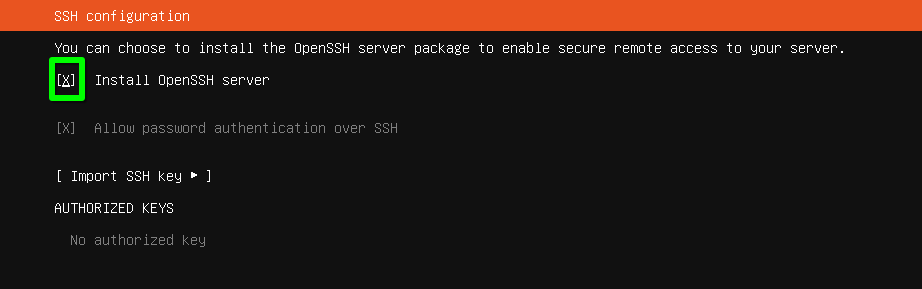
- Install the SSH server.
- (for Debian) Don't install a desktop environment
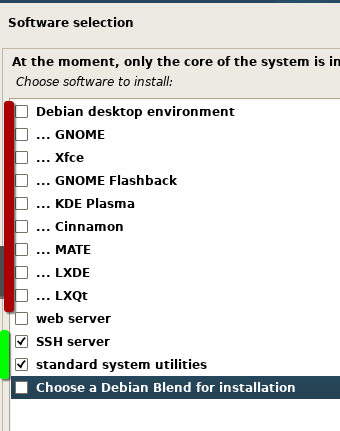
- Once the install is complete, click 'Continue' and let the system reboot
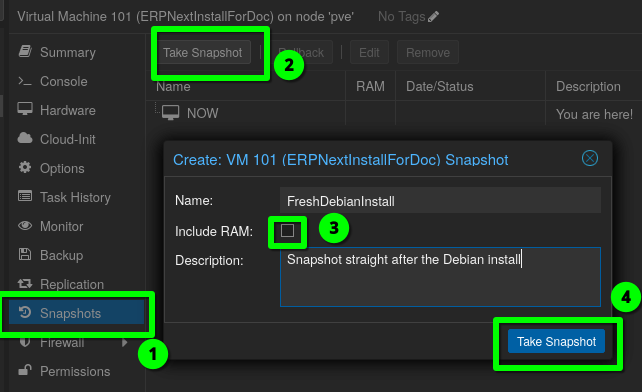
Create a snapshot of the fresh install
This way if there is an issue during the next steps, it will always be possible to quickly revert to a fresh install to restart the process
Connect to the newly created VM
- Option 1 - Via the web console (Not recommended)
- Option 2 - SSH directly with the LAN IP (only possible when connected on the local network)
ssh erpnex_admin@192.168.1.212
- Option 3 - SSH directly via tailscale (Recommended method, need to tailscale and setup tailscale first)
ssh erpnext_admin@machinename.churra-tailor.ts.net

OR

ssh erpnext_admin@100.199.199.199
- Option 4 - SSH usinhg a jump host (Use another system with tailscale as a jump host, a good way to start before tailscale is installed)
ssh -J root@pve.churra-tailor.ts.net erpnext_admin@192.168.1.212
- (Optional) Add your public ssh key to the machine for passwordless connections More informations
Install Tailscale
Install tailscale for remote access * Install curl
sudo ap install curl
- go on the tailscale admin page, selecte "add a new machine"
- Copy the script and laucnh it on the server
curl -fsSL https://tailscale.com/install.sh | sh && sudo tailscale up --auth-key=tskey-auth-xxxxxxx
- Start Tailscale
sudo tailscale up
- Take note of the tailscale ip
tailscale ip
- In the admin console, disable key expiry.
Install ERPNExt (manual Method)
Install ERPNext (Automated script)
TESTED, Worked on debian 13
- Copy the automated script on your server
wget https://raw.githubusercontent.com/abrefael/ERP-Next-16-installation-script/refs/heads/main/erp-next-installation-script.sh
- set the script to be executable
chmod +x ./erp-next-installation-script.sh
- execute the file ad follows instructions
./erp-next-installation-script.sh
- I used the tailscale url for the website address (testforwiki.churra-tailor.ts.net)
Install ERPNext (Docker, quick install)
TESTED, Worked on debian 13
- Install docker and docker compose, for debian see here
- Create a directory for ERPNext:
mkdir erpnext-docker
cd erpnext-docker
- Create a docker compose file using frappe pwd.yml as a reference, change the version number. Updated version
- Run the docker compose
sudo docker compose up -d
- Once finished, make sure all the containers are running
sudo docker ps
- Visit localip:8080 to connect
- administrator
- admin
Install ERPNext on Dokploy (Prefered method)
TESTED, Worked for v15 and V16
- Install Dokploy in a new container via helper script runned in proxmox console
- Add tailscale in this container Add Tailscale to LXC container
- Access Dokploy by using conatiner-ip-address:3000 (dokploy.churra-tailor.ts.net:3000)
- Create a new project, pick ERPNext as a template
- Add a A record in the DNS redirecting to the server address
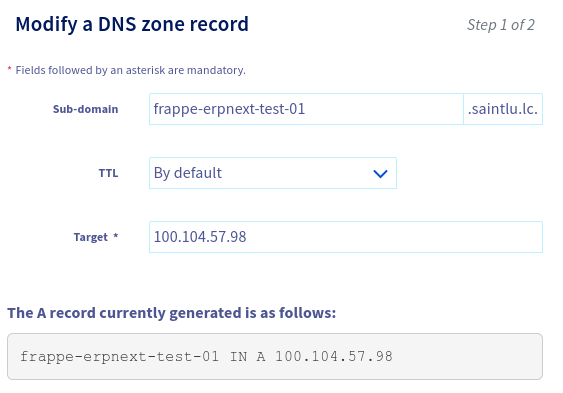
- In the "domains" tab, change the domain to the domain you just set up in the DNS
- Click Deploy and let it do it's thing (10-20min depending on the connection speed)
- The administrator password is available in the environment tab
- /!\ A warning about the certificate will be displayed when going on the app for the first time, this is caused by the fact that the certificate can't be approved by an external authority since the website is only accessible internally *
note https://github.com/frappe/erpnext/issues/49955